Sovereign country01
Collecting10 LOOKS · 1981—1997
United Kingdom
The centre of the current collection, connecting royal casual dress, country clothing, knitwear and sportswear to places, events and product candidates.
OPEN CULTURAL GUIDETHE GRAND READING HALL · WORLD DRESS
Take a volume from the shelves and travel through place, time, people and culture—from evidence and meaning to garment structure and practical recreation.
ORIGIN · ONE PHOTOGRAPH
I wanted to recreate the clothes in a photograph of Princess Diana as faithfully as possible, in a form I could actually wear today. Yet garment names, colours, patterns, fabrics, date, place and present-day alternatives were scattered across old articles, museum records and product pages.
So this site began as a way to connect one photograph to its evidence, garment structure, cultural context and practical recreation. As the first 10 looks were researched, the project grew beyond Britain into an index across people, places and periods.
Not only what looks similar, but why the identification can be trusted.
WORLD FASHION ATLAS
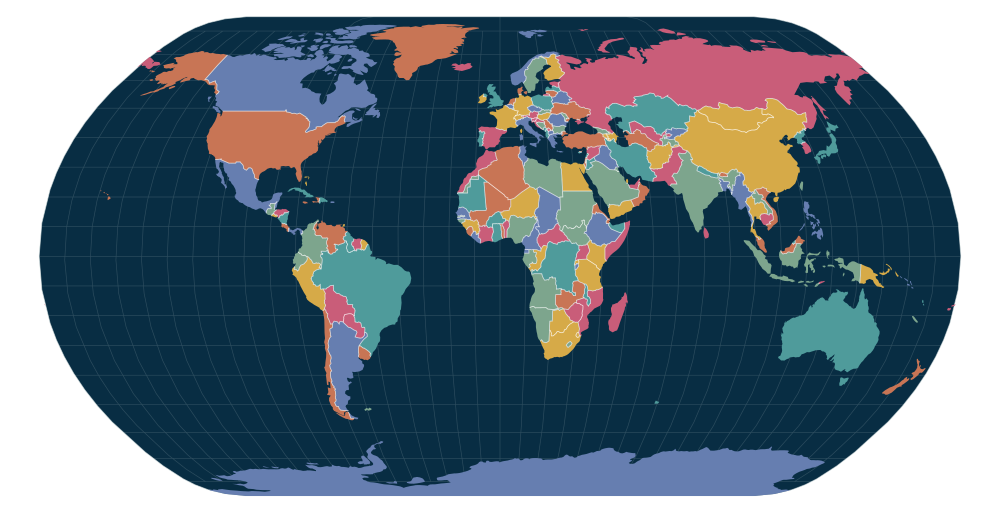
Select a location marker or list item to open guides that separate present-day country, historical place, cultural community, production place and date.
OPEN THE FULL ATLASUnited Kingdom selected
The centre of the current collection, connecting royal casual dress, country clothing, knitwear and sportswear to places, events and product candidates.
OPEN CULTURAL GUIDEMove across periods without forcing different regions into one story.
OPEN TIMELINERead dress through work, belief, climate, trade, migration, music and media.
OPEN STORIESTHE OPEN STACKS · READING COLLECTIONS
People, meaning, materials, recreation, living and method are arranged as six collections. Choose a volume and read it at this library's reading desk; external records remain end sources.
Connect life, period, relationships, makers and media to dress.
TAKE FROM SHELF02 · MEANINGSeparate wearer intent from stories created later.
TAKE FROM SHELF03 · MATERIALSFollow fibre, dye, weave, construction, labour and trade.
TAKE FROM SHELF04 · LABCompare originals, reproductions, close matches and substitutes.
TAKE FROM SHELF05 · LIVINGKeep fashion central while adding accessories, care, books and a little living.
TAKE FROM SHELF06 · METHODKeep evidence, image rights, corrections and advertising rules visible.
TAKE FROM SHELFA PHOTOGRAPHIC MANIFESTO
A court dress, cloth in a market, hands at a loom and a style born on the street all belong in the same record. The index follows not only famous wearers, but weavers, dyers, tailors, communities and the names used in each place.
FOLLOW THE PHOTOGRAPHS ACROSS THE MAPA LIVING INDEX
The world will not be simulated with empty country pages or inflated numbers. Records are added as people, dates, places, garments, sources, image rights and translations are verified. What remains unknown stays visibly unknown.
Person, date, place and event are checked; uncertainty remains visibly uncertain.
Colour and shape sit beside labour, technique, politics, climate and the act of wearing.
Image rights, sources and image modifications stay visible so every claim can be traced back.